Find the latest breaking news and information on the top stories, business, entertainment, politics, and more For in-depth coverage, interactive guides.
Search This Blog
Beijing to implement stricter Covid-19 restrictions to help contain virus ahead of Lunar New Year
Beijing has announced that it will require people travelling to the city from low-risk areas of China to present a negative Covid-19 test, as part of a raft of measures introduced ahead of the Lunar New Year celebrations.
The restrictions will come into effect on January 28 and last until March 15, covering both the Lunar New Year festivities and the annual parliament meeting that occurs in the city. People who enter Beijing will have to undergo a 14-day health observation period, with a test taken on the seventh and 14th day after their arrival.
The spokesperson for Beijing’s city government, Xu Hejian, announced the new measures on Wednesday, over fears that travel during the holiday period could see people spread the virus around the country, causing a spike in cases.
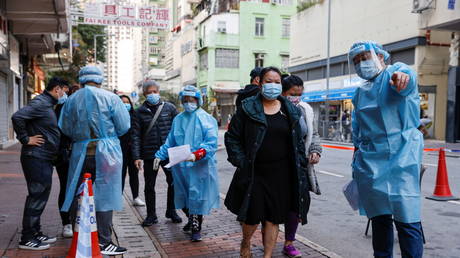
In recent weeks, areas around Beijing have seen Covid-19 restrictions increased since the start of the year, as authorities took a ‘wartime mode’ approach to prevent a wider outbreak occurring in Shijiazhuang and Xingtai. Last Friday, Hong Kong ordered thousands of residents to stay at home, as the city went into its first Covid-19 lockdown, imposing a quarantine until residents had tested negative.
The Lunar New Year sees millions of Chinese citizens move across the country, celebrating with friends and family, an event that the country’s National Health Commission vice minister, Zeng Yixin, warned would “further boost the risk of transmission.”
China, where the virus originally began in Wuhan, has reported 100,291 infections and 4,814 deaths since the start of the pandemic.
Think your friends would be interested? Share this story!
The Italian government is reportedly set to announce an easing of Covid-19 restrictions in certain regions despite warnings from health experts that it is too soon to relax measures designed to control the spread of the virus. Veneto, near Venice, Calabria in the south, and Emilia-Romagna in the north of the country are all expected to be downgraded from 'orange' to 'yellow' zones, according to local reports. The move would allow bars and restaurants to reopen, as well giving residents more freedom to move around their areas. The World Health Organization, however, has warned that it is "too early to ease up," as there is "still [a] very high" presence of the virus in the country. A public health expert who advises the Italian health minister has echoed this note of caution, telling AFP that Italy was "bucking the trend," while other European nations remain in lockdown and some are even considering stricter measures. Also on rt.com ...
New Zealand has enacted a self-identification law that makes it easier to amend the sex recorded on birth certificates. It removes a requirement on applicants to provide evidence of having undergone sex-reassignment procedures. The country’s parliament on Thursday voted unanimously to pass the legislation, titled the ‘Births, Deaths, Marriages and Relationship Registration Bill’. Once it comes into force, the new law will allow transgender, intersex, gender diverse, and takatapui (a Maori word for LGBT) people to declare their sex on the basis of how they identify. Although the provision to self-identify sex on birth certificates was introduced in 2018, applicants still had to prove they had undergone sex-reassignment surgery or other medical treatments to change their sex according to their gender identity. “Today is a proud day in Aotearoa’s history,” Internal Affairs Minister Jan Tinetti said, referring to New Zealand’s Maori name. “Parliament has voted in favour of inclusivity ...
Comments
Post a Comment